How is Caviar made? Everything About Caviar Production

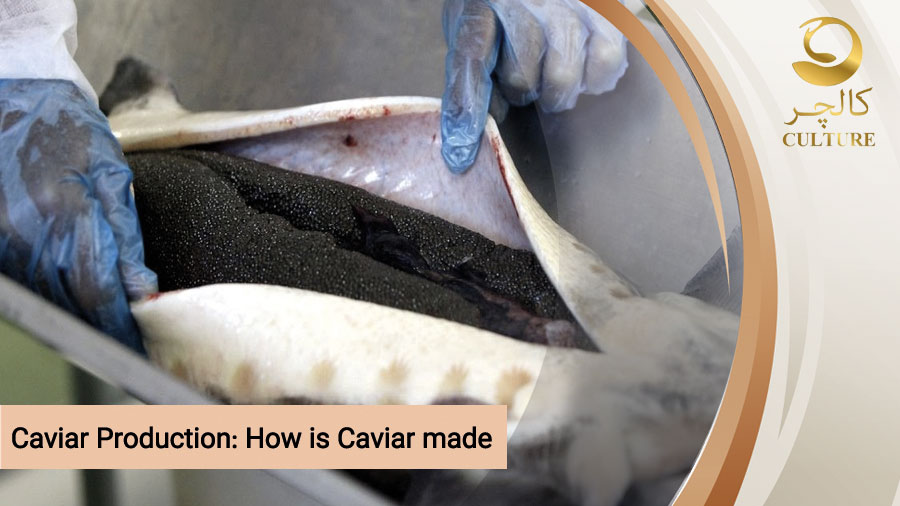
How is caviar made? Genuine sturgeon caviar is produced through a carefully controlled process that begins long before the eggs reach a tin. In modern aquaculture, sturgeon are raised and monitored until the female fish reaches the stage at which her roe can be harvested. The eggs are then separated, cleaned, salted, graded and packed under controlled conditions. The exact method can vary between farms and producers. Harvesting methods, salting levels, equipment and packing systems are not identical everywhere. What remains consistent is the need for careful handling at every stage, because caviar is a delicate product and the eggs must remain intact throughout production. Here is how the caviar production process works.
What Is Caviar?
Caviar is salted roe from sturgeon. The term is used for the processed eggs of sturgeon species, including varieties such as Beluga, Ossetra, Sevruga and Baerii. Caviar production therefore involves more than simply collecting fish eggs. The roe must be obtained at the appropriate stage of development, separated from the surrounding tissue, cleaned, salted and prepared for storage. This is also why caviar should not be confused with fish roe in general. Roe can come from many types of fish, while traditional caviar refers specifically to sturgeon roe. If you want to understand the different varieties available, see our guide to caviar types.
Where Does Modern Caviar Come From?
For much of its history, caviar was associated with wild sturgeon, particularly those found in the Caspian Sea and surrounding waters. Overfishing, habitat changes and pressure on wild sturgeon populations led to major restrictions on the international trade in wild sturgeon products. Modern caviar production is now largely based on aquaculture. Instead of relying on wild fish, specialised farms raise sturgeon in controlled environments until the females are mature enough to produce roe.
Aquaculture can take different forms. Some producers use ponds, while others use tanks or recirculating aquaculture systems. The precise environment depends on the species, farm and production model. The important point is that farmed caviar does not mean the roe is produced in a completely different way. Once the roe is ready for processing, the basic production stages remain focused on careful extraction, cleaning, salting, grading and packing.
Raising and Maturing Sturgeon
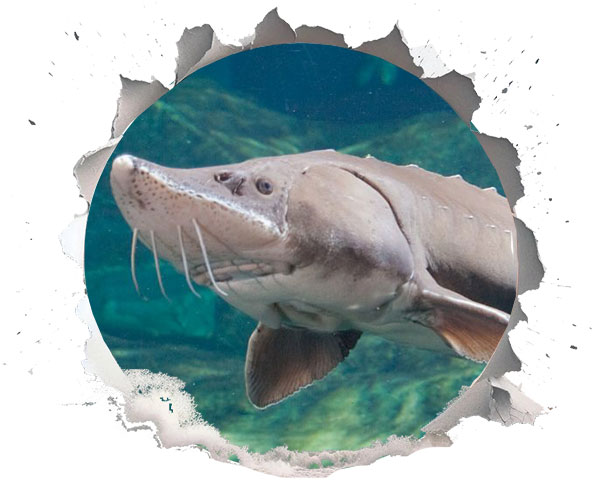
Caviar production begins years before the first eggs are harvested. Sturgeon are slow-growing fish, and females need to reach sexual maturity before their roe can be used for caviar. The time required varies according to the species and farming conditions, so there is no single maturation period that applies to every sturgeon. During the growing period, farms monitor factors such as water quality, fish health, growth and feeding. The aim is to maintain suitable conditions throughout the fish’s development.
This long production cycle is one of the fundamental differences between sturgeon caviar and many other foods. A producer cannot simply begin a new crop and harvest it a few weeks later. Caviar production requires long-term planning and careful management of the fish. The species also matters. Beluga, Ossetra, Sevruga, Baerii and other sturgeon do not have identical growth patterns or roe characteristics.
How Do Farmers Determine When the Eggs Are Ready?
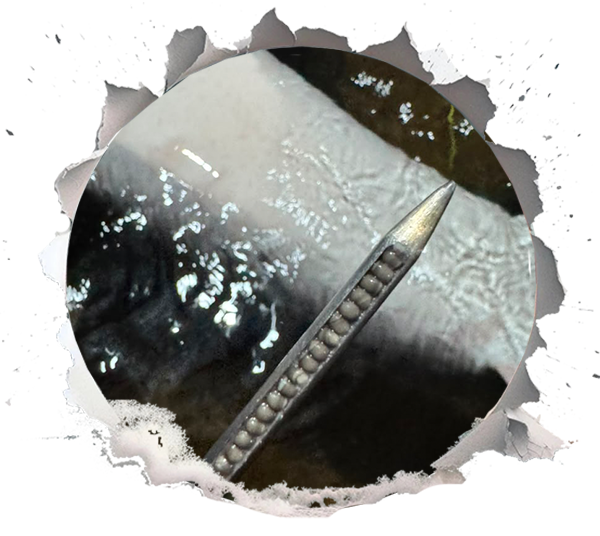
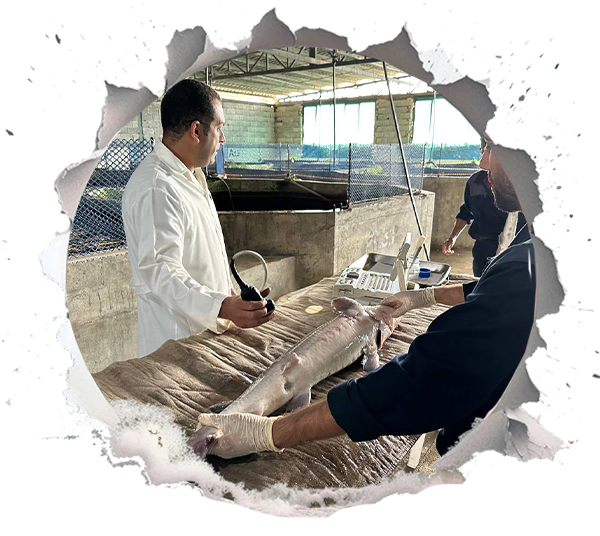
The timing of harvest is an important part of caviar production. The objective is to process the roe when the eggs have reached a suitable stage of development. Producers therefore need to assess the condition of the female fish and her roe before harvesting. Methods can differ between farms. Some producers use techniques such as ultrasound or other assessments to examine roe development. The exact method should not be treated as a universal industry standard, because production systems and harvesting practices vary.
The maturity of the roe matters because the eggs need to withstand the following stages of production. Their condition can affect how well they separate, how they respond to handling and how they perform during salting and grading. This is one reason why the production of high-quality caviar requires experience well before the roe reaches the processing room. Choosing sustainable caviar protects wild sturgeon populations, keeps rivers clean, and guarantees the highest quality eggs.
Harvesting the Roe
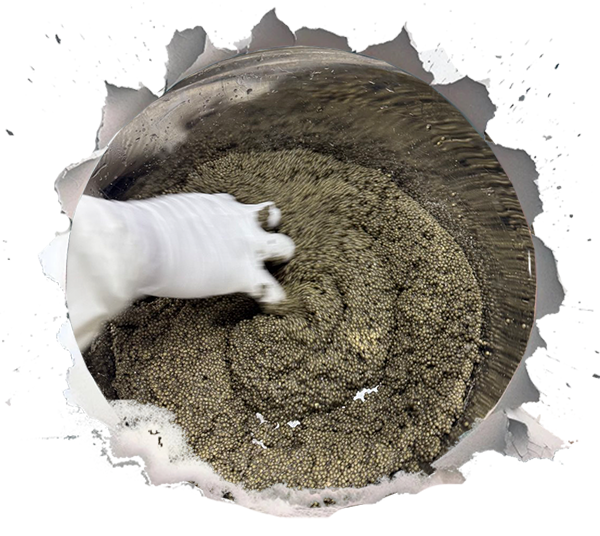
Once the roe is considered ready, it is harvested from the female sturgeon. The exact harvesting method depends on the producer and production system. Traditional production involves removing the ovaries from the fish and processing the roe shortly afterwards. Some modern producers also use methods designed to obtain roe without killing the fish.
Because harvesting practices are not identical across the industry, claims such as “no-kill” or “humane harvesting” should only be made when they describe a documented method used by a specific producer. After harvesting, the roe needs to be handled carefully. The eggs are delicate, and excessive pressure or rough handling can damage them. The harvested roe is therefore moved quickly into the processing stage, where the eggs are separated from the ovarian tissue.
Cleaning and Separating the Eggs
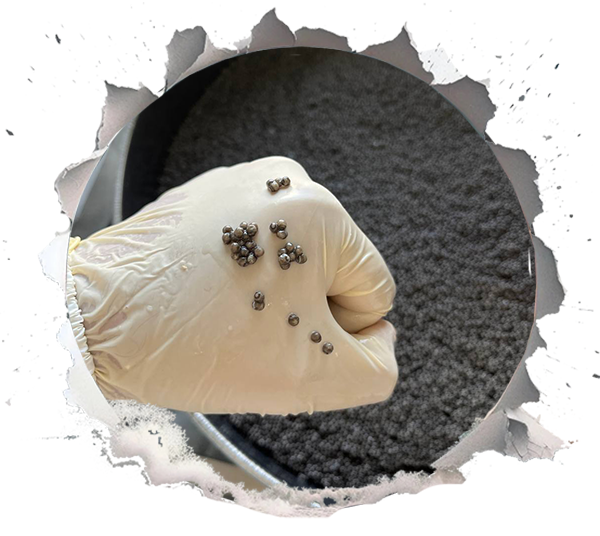
Freshly harvested roe is not yet ready to be sold as caviar. The eggs are surrounded by ovarian tissue and other material that needs to be removed. The roe is therefore separated and cleaned before salting. A traditional method involves passing the roe over a fine mesh or sieve. This helps separate the individual eggs from the surrounding membrane and tissue. The eggs may then be washed or otherwise cleaned according to the producer’s processing method. The purpose is to remove unwanted material while keeping the individual grains intact. This stage requires careful handling. Damaged or broken eggs can affect the appearance and texture of the finished product. Once the eggs have been separated and cleaned, they can move on to salting.
Salting Caviar
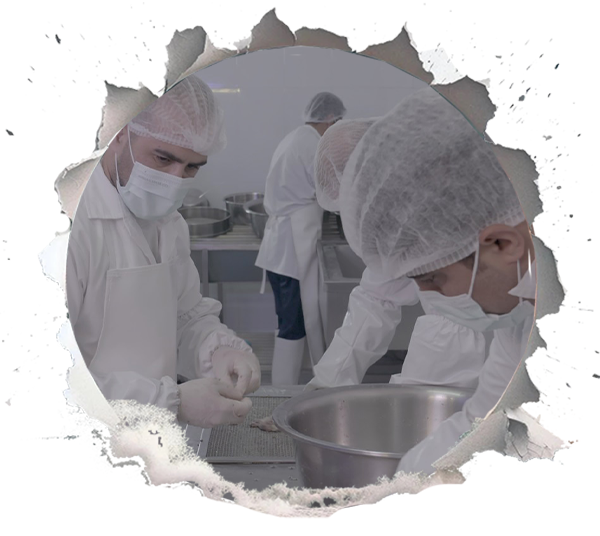
Salt is a fundamental part of caviar production. It helps preserve the roe while also influencing the finished product’s flavour and texture. The amount of salt and the exact curing method can vary according to the producer and the type of caviar being made. One of the best-known terms used in caviar production is Malossol, which means “little salt”. Malossol caviar is lightly salted compared with more heavily preserved preparations.
However, Malossol should not simply be treated as a universal synonym for one exact recipe. Different producers may use different salting levels and methods. The roe must be salted carefully. Too much salt can change the character of the product, while insufficient preservation can create food-safety and storage problems. For this reason, salting is one of the most important technical stages in the caviar production process. For a closer explanation of the term, see our guide to Malossol caviar.
Grading and Quality Control in Caviar Production
After cleaning and salting, caviar is assessed and graded. The exact grading system varies between producers and markets, but characteristics commonly considered during caviar evaluation include:
- egg size
- uniformity
- colour
- firmness
- integrity of the eggs
- freshness
- processing quality
- overall appearance
This is important because caviar quality cannot be determined by one characteristic alone. For example, a larger grain is not automatically better simply because it is larger. Likewise, a particular colour should not be treated as a universal quality ranking. Grading is a combination of characteristics, and the standards applied can depend on the species, product and producer. Quality control can also involve food-safety checks and traceability records. Where required, information about the species, origin, batch and production chain forms part of the documentation associated with the finished product.
Packing and Refrigeration
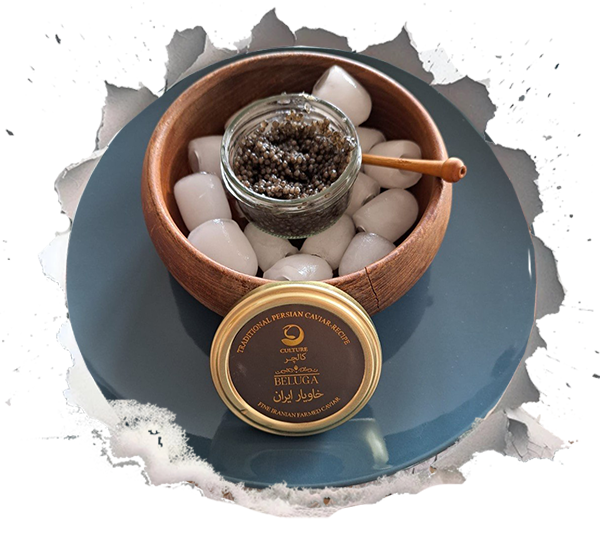
Once the caviar has been processed and graded, it is packed into suitable containers. Caviar may be packed in metal tins or glass containers, depending on the product and producer. The packaging needs to protect the delicate eggs and help maintain the product under appropriate storage conditions. Refrigeration is also essential. Caviar is a perishable food and must be kept under controlled conditions after processing. The cold chain continues beyond the production facility. During storage and transport, temperature control helps protect the quality and safety of the finished product. This is why the journey from producer to customer is not complete when the tin is sealed. Correct storage, transport and handling remain important until the caviar reaches its final destination.
From Producer to Customer
Once the caviar has been packed, it can enter the distribution chain. Depending on the producer and market, this may involve a farm, processing facility, distributor, retailer, restaurant or direct-to-consumer supplier. Traceability is particularly important for sturgeon products. CITES controls apply to international trade in sturgeon and their products, and caviar packaging can carry information that helps identify the species and source. For consumers, this makes the label an important part of buying authentic caviar. Species, origin and other identification details can help establish where the product comes from and how it entered the market. If you are buying caviar, our guide on how to read a caviar label explains what to look for.
Wild vs Farmed Caviar
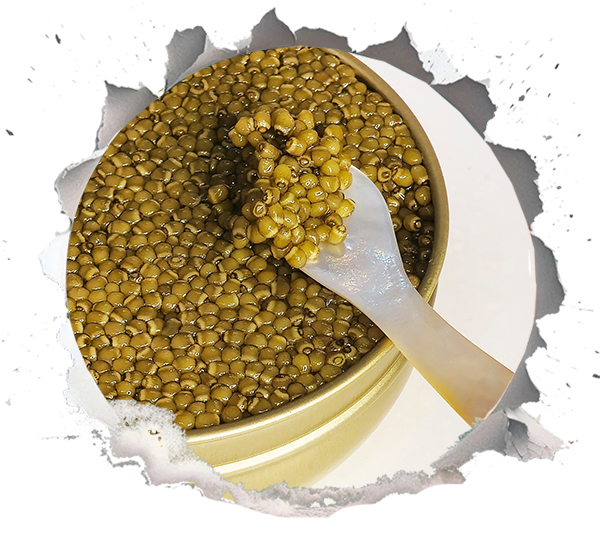
The modern caviar industry includes both historical wild-caught production and contemporary farmed production, but they are not equivalent in terms of how the fish enter the production chain. Wild caviar traditionally came from sturgeon caught in natural waters. Today, international trade in wild sturgeon products is heavily regulated, and aquaculture plays a major role in supplying the caviar market. Farmed caviar begins with sturgeon raised in a controlled aquaculture environment. The fish are monitored during their development until the females reach the appropriate stage for roe production.
The comparison between wild and farmed caviar involves more than production alone. It also includes conservation, regulation, traceability, farming methods and the characteristics of individual products. For that reason, it is better to look at these subjects separately rather than treating “wild” or “farmed” as a simple quality ranking. Read our dedicated guide to wild vs farmed caviar for a deeper comparison.
Frequently Asked Questions
Caviar is made from sturgeon roe that is harvested when the eggs are sufficiently developed, separated from the ovarian tissue, cleaned, salted, graded and packed. The finished product is then kept under controlled storage conditions.
The actual processing of harvested roe can take place relatively quickly, but caviar production as a whole takes years. Female sturgeon must first reach sexual maturity before their roe can be harvested, and the time required varies by species and farming conditions.
Traditional granular caviar is not cooked in the way a conventional food is cooked. The roe is processed, cleaned and preserved primarily through salting and controlled storage. Some products may undergo additional processing, so the method should be checked for the specific product.
Malossol means “little salt” and refers to lightly salted caviar. It describes the salting approach rather than a particular sturgeon species.
No. Caviar has historically been produced from wild sturgeon, while modern production also relies heavily on aquaculture. Wild sturgeon products are subject to strict international controls, and the source of a particular product should be checked through its labelling and traceability information.
No. The overall production stages are similar, but harvesting methods, aquaculture systems, cleaning techniques, salting recipes, grading standards and packing methods can differ between producers.
Explore Caviar Production Further
Understanding how caviar is made helps explain why every tin represents a long production cycle and several carefully controlled stages. From raising and maturing sturgeon to harvesting, cleaning, salting, grading and packing the roe, each step can affect the finished product. If you want to explore the subject further, learn about our process at Culture Caviar, or explore our caviar collection.